Fine hair is not thin hair, and the difference matters. Fine describes the diameter of each individual strand, which is smaller than average. You can have a full head of fine hair and still watch it fall flat by noon, because each strand is light, bends easily, and gets weighed down by anything heavy sitting on it. Thin hair, by contrast, means fewer strands on the head. Plenty of people in Wadesboro have one, the other, or both, and the fixes overlap but are not identical.
The good news is that fine hair responds well to the right cut and a few changed habits. Nothing here adds strands. What it does is stop the strands you have from being flattened, separated, or broken, so the hair you own takes up the visual space it should.
Start with the cut: blunt beats wispy
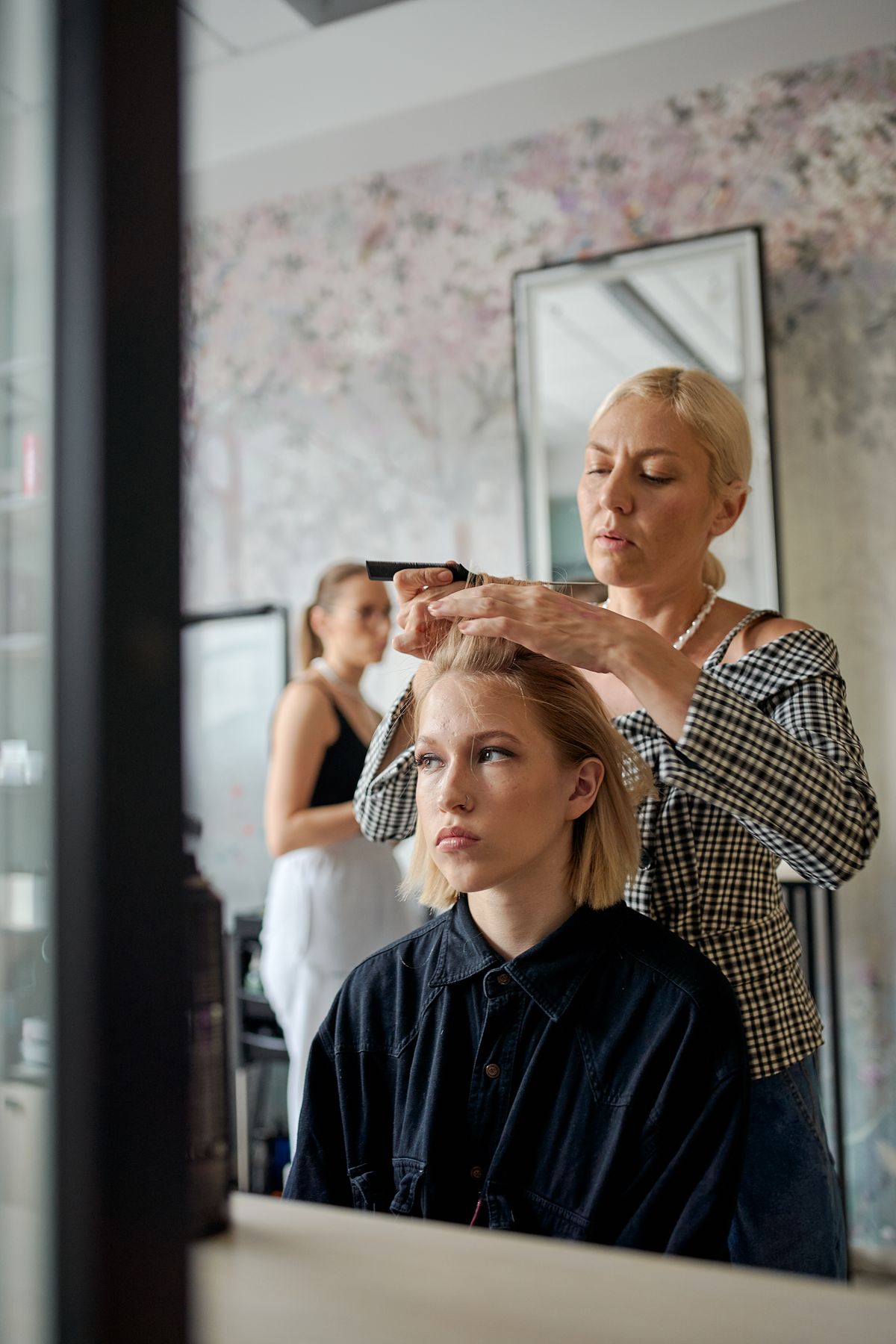
A blunt perimeter is the single biggest favor a cut can do fine hair. When the ends are cut on one clean line, they line up and read as a solid edge. When the ends are heavily razored, feathered, or point-cut into wisps, each strand ends at a different length and the bottom of the haircut looks see-through. Fine hair also benefits from keeping length at or above the shoulders in many cases, because the longer fine hair grows, the more its own weight pulls it flat and the older and more worn the ends get.
Layers are a tool, not a default. A few short layers at the crown can lift the top and create the impression of body. Layers cut through the whole head do the opposite: they remove mass from exactly the places fine hair needs it. If a stylist suggests layers, the useful question is where they will sit and how much length they will take from the ends.
Work the checklist, in order
Cut first, then product, then washing, then heat. Each line below has a pass sign and a fail sign, so you can check your current routine honestly instead of buying a shelf of new bottles.
The fine-hair thickness checklist
- Perimeter: Pass if your ends form one solid line when you pull the hair forward over your shoulders. Fail if you can see through the last two inches. Fix: ask for a blunt cut and skip the texturizing at the ends.
- Layers: Pass if layers sit mostly at the crown and top. Fail if the sides feel stringy and thin while the top is puffy. Fix: grow the side layers out and keep future layers short and high.
- Conditioner placement: Pass if conditioner goes on the mid-lengths and ends only. Fail if you work it into the scalp and roots, where it coats fine strands and drops them flat within hours.
- Product weight: Pass if your styling products are mousses, foams, or light sprays. Fail if your routine leans on heavy oils, thick creams, or butters, which fine hair absorbs and then collapses under.
- Wash timing: Pass if you wash when the roots actually look oily, which for many fine-haired people is every day or every other day. Fail if you are stretching to a rigid schedule while the top goes limp and separated.
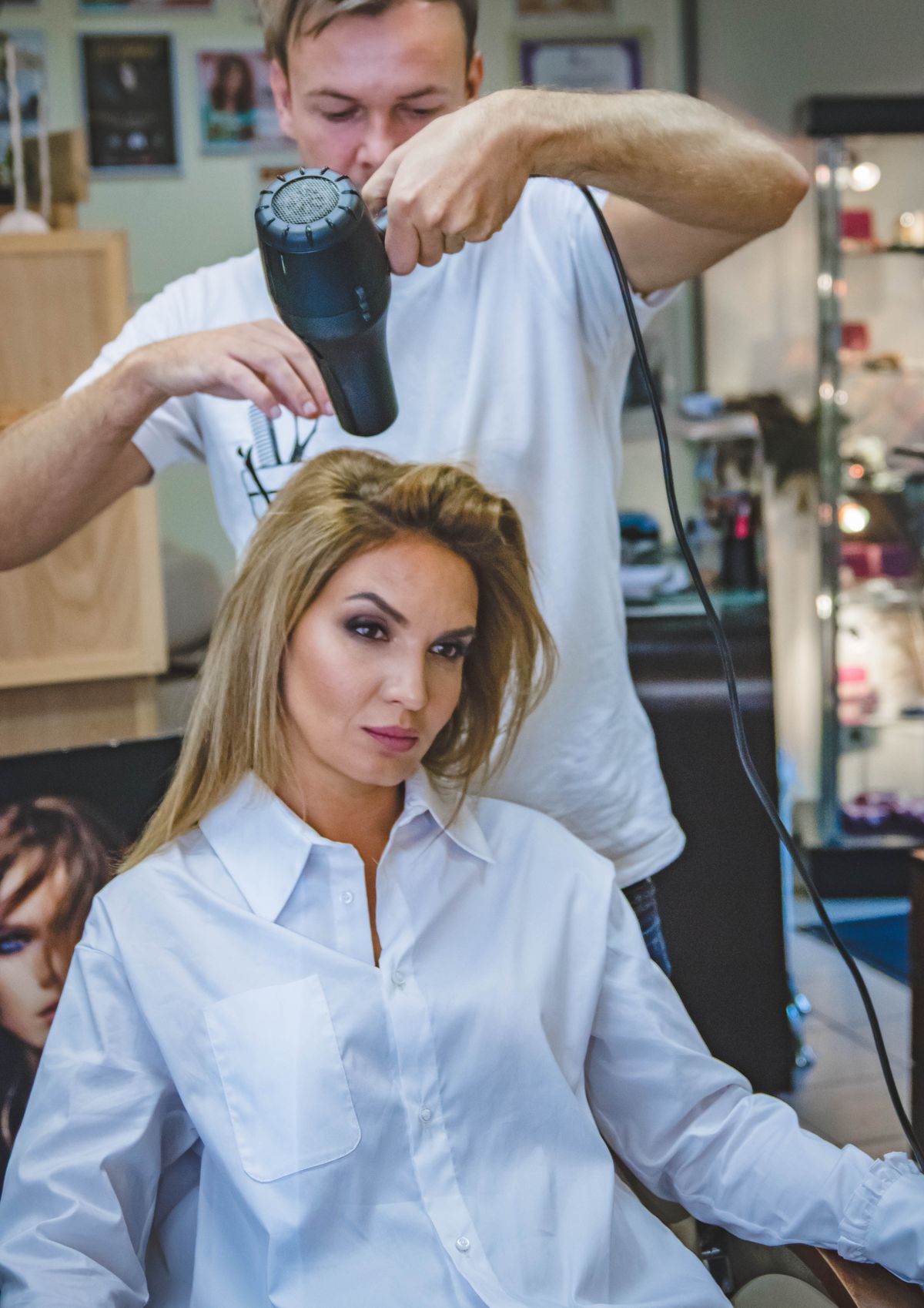
- Drying direction: Pass if you blow-dry with the hair lifted up and away from the scalp, ideally with your head tipped forward for part of it. Fail if you part it wet, smooth it down, and let it air-dry flat against your head.
- Brush choice: Pass if you detangle gently, starting at the ends. Fail if you rake a brush from root to tip through wet hair, which is when fine strands stretch and snap most easily.
Product weight is the quiet culprit
Fine hair and heavy product are a bad match for a simple reason: a strand with a small diameter has little strength relative to the coating on it. Oils and rich creams that give coarse hair control will pull fine hair down and make it look oily faster, because there is less hair surface to spread the oil across. Volumizing mousses and root-lift sprays are formulated lighter for exactly this reason. Apply product to damp hair, use less than you think you need, and keep oils for the very ends only, if at all.
Washing habits that help instead of hurt
Fine hair shows scalp oil quickly because the oil has a short, straight path down a smooth strand. Washing more often is not a failure for fine hair; it is often the correct setting. What matters is how you wash. Shampoo the scalp, let the rinse carry suds through the ends rather than scrubbing them, and condition from the ears down. A clarifying shampoo every couple of weeks clears the buildup of dry shampoo and styling product that can make fine hair look dull and separated even when it is clean. At Salon 52, a stylist can also tell you honestly whether your hair is fine, thinning, or both, which changes which half of this checklist matters most.
Common questions
Will layers make my fine hair look thicker?
Only in the right place. Short layers at the crown add lift and movement on top, but layers through the lengths remove mass and can make the ends look thinner, so placement matters more than the word itself.
Is it bad to wash fine hair every day?
No. Fine hair shows oil fast, and washing when the roots need it is reasonable. Use a gentle shampoo, condition only the lengths and ends, and the daily wash does far less harm than a week of buildup and dry shampoo.
Can products actually add thickness?
Products coat and lift strands so hair looks and feels fuller, but they do not change the diameter of the strand itself or grow new hair. Cutting and handling do more for the appearance of thickness than any single bottle.
Photos in this guide are representative stock images.
← All guides from Salon 52← Back to Salon 52