Frizz is not a character flaw in your hair. It is water doing chemistry. Each hair strand is built largely of keratin, and the bonds inside it can be temporarily reshaped by water. When humid air surrounds dry or porous hair, the strand pulls moisture in, swells, and its cuticle lifts unevenly. Hair that was smooth at 7 a.m. in Wadesboro can look like a different head by lunch in July, because the air itself has been re-styling it all morning.
Honest management starts there: you cannot seal hair off from Carolina summer air, and any product promising a total frizz cure is overselling. What you can do is reduce how thirsty the strand is, slow the moisture exchange down, and pick styles that work with swelling instead of against it. That is a realistic goal, and it is achievable.
Read the symptom before you treat it
Not all frizz is the same problem. Frizz that appears at the crown and hairline in little halos is often new growth and broken short hairs misbehaving in damp air. Frizz through the lengths, where the whole head expands and feels rough, usually points to porosity: hair that has been lightened, heat-styled hard, or simply worn down over time, drinking in moisture fast. Frizz that shows up only on day two or three is frequently a styling issue, where the original product has worn off and the hair is unprotected. The fix differs for each, which is why one miracle bottle disappoints so many people.
Work the problem in order
- Check your porosity honestly. Hair that dries slowly, feels rough when you run a strand between your fingers from tip to root, and frizzes within minutes outside is porous hair. Porous hair needs conditioning and protein balance first; styling tricks alone will not hold it.
- Condition like you mean it. Conditioner smooths and partially seals the cuticle, which slows moisture intake. Leave it on for a few minutes rather than rinsing instantly, and use a deeper conditioning treatment regularly through the summer if your hair is lightened or heat-styled often.
- Apply styling product to wet hair, not damp hair. Anti-frizz serums, creams, and gels work by coating the strand before humid air gets to it. Hair that has already started air-drying has already started swelling, and product applied after the fact mostly sits on top.
- Touch it less. Every pass of hands or a brush through dry hair lifts the cuticle, breaks up curl clumps, and spreads strands apart into a halo. Style it, let it set, and leave it alone.
- Dry it fully before you go out. Hair left even slightly damp will finish drying in humid air, which means it finishes swelling outside too. A full dry with a dryer and a smoothing pass gives you a sealed starting point that lasts hours longer.
- Pick summer shapes that tolerate swelling. Braids, buns, twists, and defined curls worn as curls all forgive humidity. A glass-straight blowout on a porous head in August is a fight you will lose by noon, through no fault of technique.
- Know when it is a cut and health issue, not a product issue. Ends that are split and shredded frizz no matter what coats them. If the last few inches never smooth out while the rest behaves, that is a trim conversation, not a shopping one.

The professional options, stated plainly
Salon smoothing and keratin treatments reduce frizz by coating and partially sealing the hair shaft, and for heavy summer frizz they are the strongest tool available. They do not make hair permanently straight, they wear off gradually over a period of months, and they still require reasonable home care to perform. Think of them as lowering the difficulty level of every summer morning, not as exemption from the weather. A stylist at Salon 52 can look at your hair's condition and tell you whether your frizz is a good candidate for that route, or whether a cut and a conditioning plan would get you most of the same result.
Common questions
Why does my hair frizz the moment I walk outside?
Your hair is drier or more porous than the air around it, so it pulls moisture in and swells unevenly. Conditioning well, applying product to soaking-wet hair, and drying fully before going out all slow that exchange down.
Does brushing cause frizz?
On dry, wavy, or curly hair, usually yes. Brushing separates strands and lifts the cuticle, which reads as frizz. Detangle in the shower with conditioner, or with fingers on dry hair, instead.
Can frizz be fixed permanently?
No. Smoothing treatments reduce frizz for a stretch of months and then fade as the hair grows and the coating wears. Anyone promising a permanent cure for humidity frizz is selling you something.
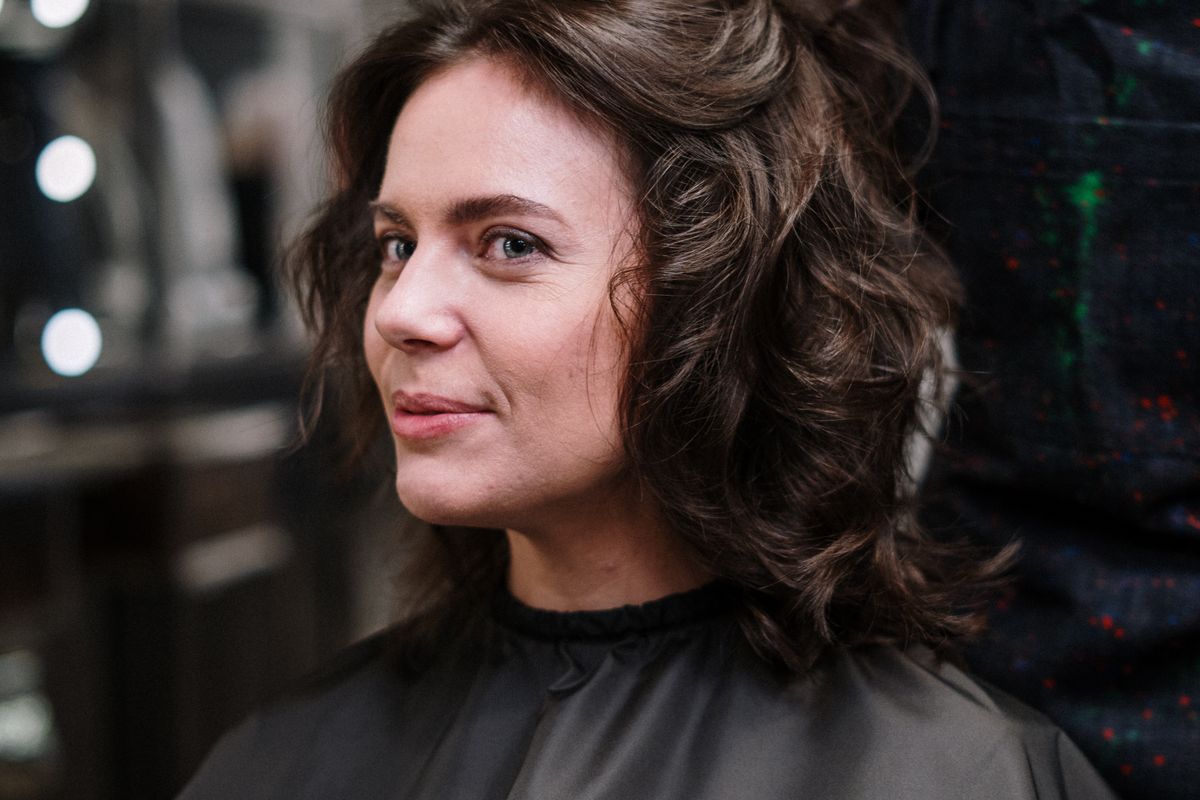
Photos in this guide are representative stock images.
← All guides from Salon 52← Back to Salon 52