If your blonde looked right in the salon mirror and turned yellow, orange, or faintly green within a few weeks, the color itself may not be the problem. The water may be. Wadesboro households draw from a mix of municipal supply and private wells, and both can carry dissolved minerals. Hard water brings calcium and magnesium. Well water often adds iron and manganese. Those minerals ride along in every shower, settle on the hair shaft, and build up in layers too thin to see but thick enough to change how light reflects off your hair.
Blonde shows it first because light hair has the least pigment to hide behind. Brunettes get buildup too; it just reads as dullness instead of a color shift. Below, the common claims about water and hair, sorted into what holds up and what does not.
Why minerals change the color you see
Hair that has been lightened is more porous than virgin hair, which means it absorbs and holds onto mineral deposits more readily. Iron oxidizes and leaves a rusty, orange cast. Copper, which can come from plumbing and from pool water chemistry, is the source of the green tinge people blame on chlorine alone. Calcium and magnesium mostly dull the surface and make hair feel rough and hard to detangle. None of this is the toner failing. Toner fades gradually and evenly; mineral color tends to look patchy, worse at the ends, and resistant to your usual purple shampoo.
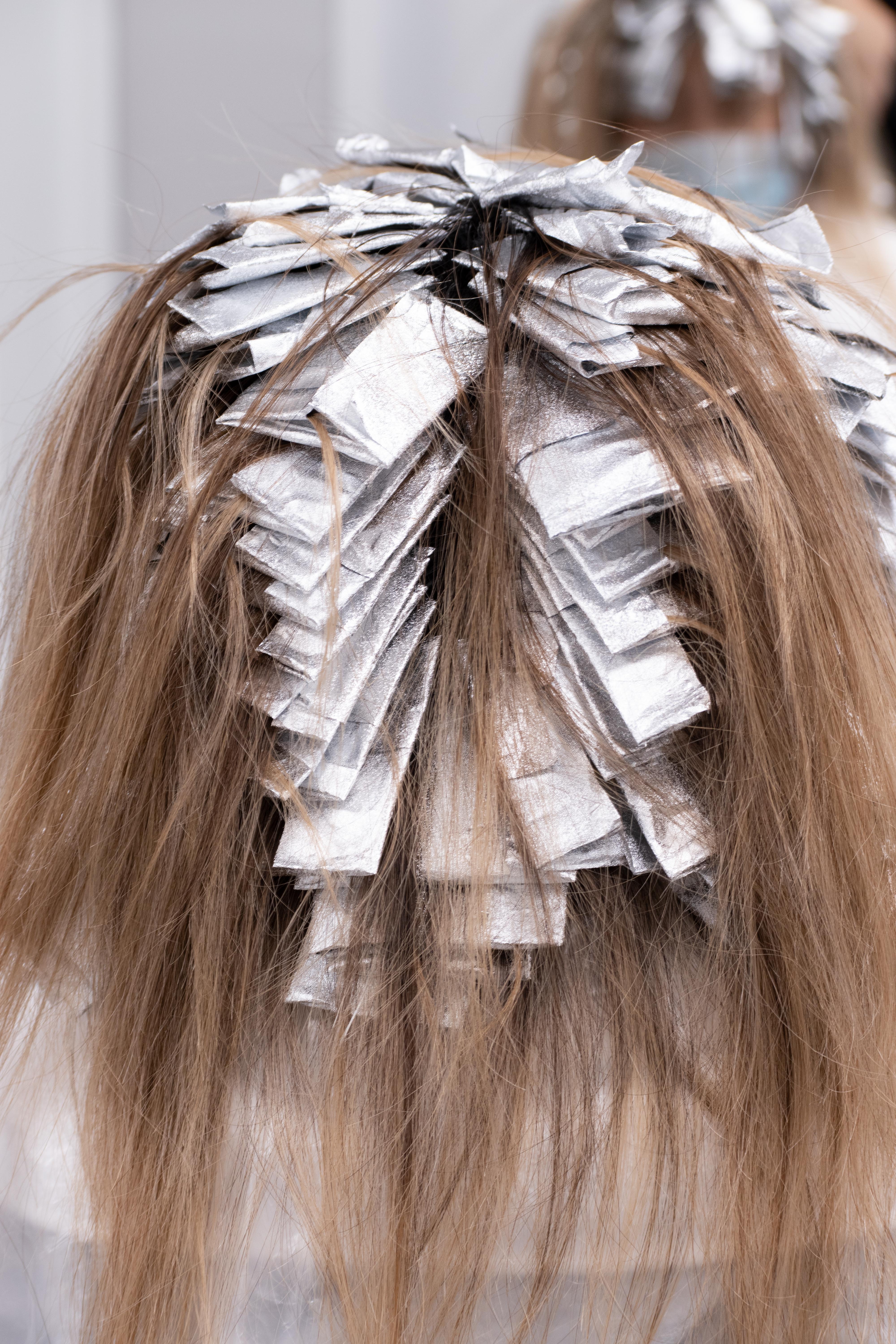
Myth vs. fact: water and blonde hair
| Claim | Verdict | What is actually going on |
|---|---|---|
| Chlorine turns blonde hair green | Mostly myth | The green comes from copper in the water, from algaecides and plumbing, binding to the hair. Chlorine helps oxidize the copper, but copper is the pigment. |
| Hard water can make blonde look brassy | Fact | Iron and mineral deposits coat the shaft and shift light hair toward yellow and orange tones, especially on porous, lightened ends. |
| Purple shampoo fixes any yellow problem | It depends | Purple shampoo neutralizes yellow tones from fading toner. It cannot remove mineral deposits sitting on the shaft, so brassiness from water often ignores it. |
| A clarifying shampoo and a chelating shampoo are the same thing | Myth | Clarifying removes product and oil buildup. Chelating is formulated to bind and lift mineral and metal deposits, which is the tool water problems actually call for. |
| Well water is always worse than city water | It depends | Wells vary enormously. Some are soft and clean; some carry heavy iron. City water can be hard too. The test is your hair and your fixtures, not the source label. |
| Once minerals are in the hair, only cutting removes them | Myth | Chelating treatments, used at home or in the salon, can pull a large share of mineral buildup out of the hair without taking length off. |
Telling water brassiness from toner fade
Three clues separate the two. First, location: water damage concentrates on the most porous hair, usually the ends and the front pieces that take the most shower spray, while toner fade is even all over. Second, feel: mineral-heavy hair often feels coated, rough, or strangely squeaky and tangles more than it used to. Third, response: if purple shampoo makes no difference after a couple of uses, stop using more of it, because excess purple product on porous hair just adds its own dull cast. A chelating wash is the correct test. If the color brightens noticeably after one, water was your culprit.
Keeping it from coming back
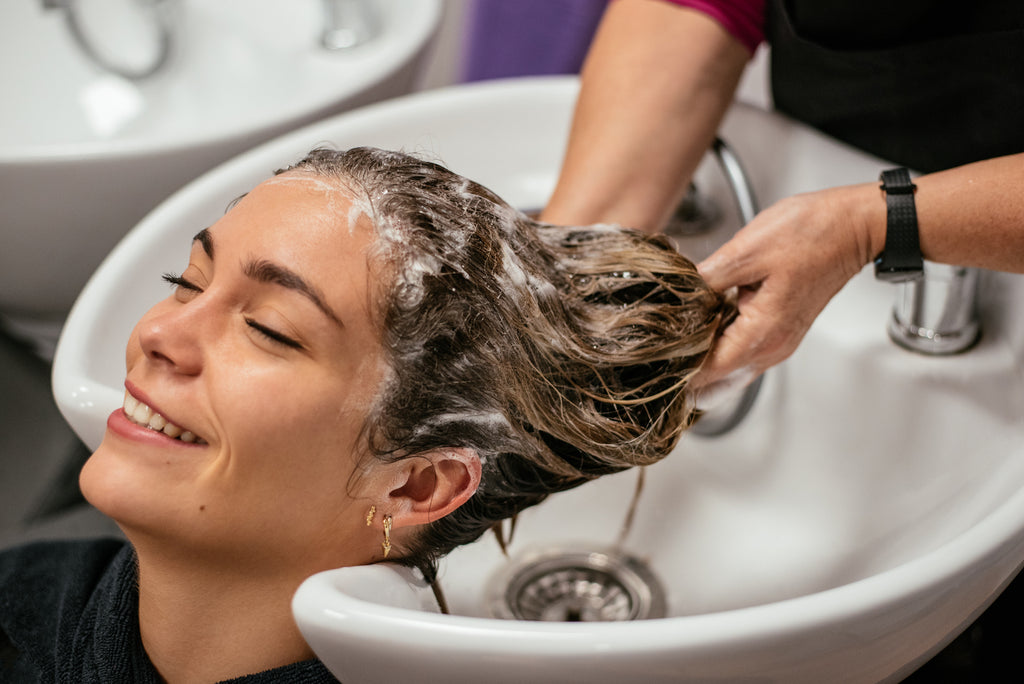
Prevention is mostly about barriers and habits. Wetting your hair with clean water before a swim saturates the shaft so it absorbs less pool water. Rinsing after swimming and after workouts matters more than most people expect. At home, a chelating or clarifying wash on a regular rotation, rather than as an emergency measure, keeps deposits from stacking up to the point of visible color shift. Some households add a shower filter, which can reduce some minerals and chlorine, though it will not soften truly hard water the way a whole-house softener does. If you color your hair at Salon 52, mentioning that you are on well water is genuinely useful information, because it shapes how a stylist plans your toner and your take-home routine.
Common questions
How do I know if my water is the problem?
Look for the pattern: brassiness that concentrates at the ends, hair that feels coated or tangles more, and purple shampoo that stops working. A single chelating wash that visibly brightens the hair confirms it.
Is clarifying shampoo safe on color-treated hair?
Used occasionally, yes, but chelating formulas are the right tool for minerals and both are stronger than daily shampoo. Rotate one in every couple of weeks rather than using it at every wash, and condition well afterward.
Why did my hair turn green at the pool but not at home?
Pool water carries copper from treatment chemicals and plumbing, and copper binds to lightened hair and oxidizes green. Pre-wetting your hair with clean water and rinsing right after swimming greatly reduces it.
Photos in this guide are representative stock images.
← All guides from Salon 52← Back to Salon 52